
Reflections from IP Service World

 4 mins
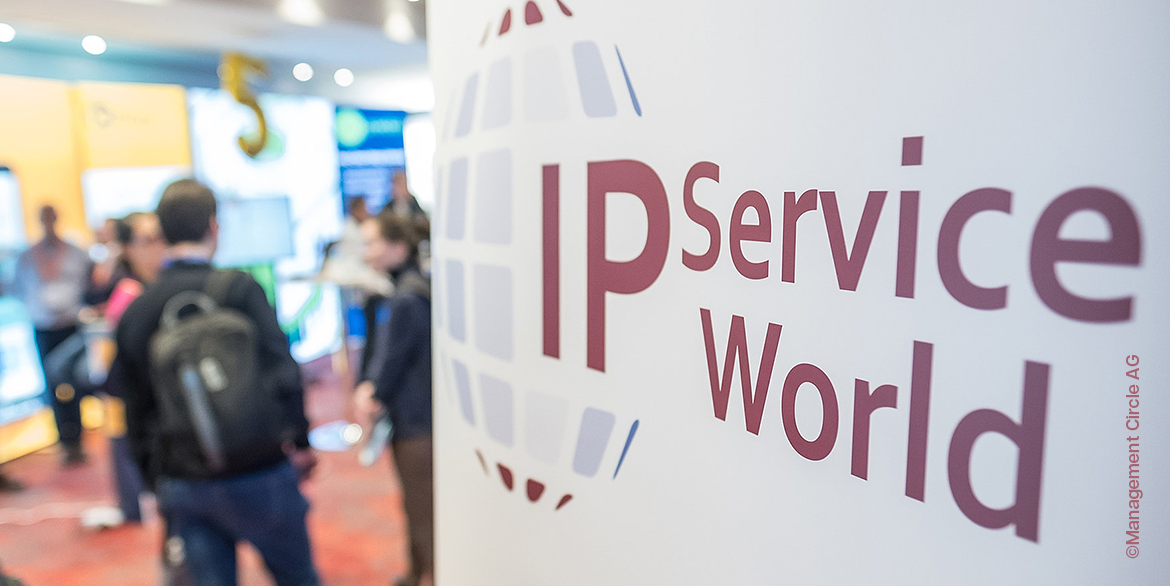
Last week we attended IP Service World in Munich as a Platinum sponsor. The two-day event was packed with insightful talks, workshops, and roundtables hosted by IP industry leaders.
AI and technology were key discussion points. The overarching question wasn’t whether AI will shape the future of intellectual property, but how to adopt it responsibly given the rapid rate of change. RWS’s André Sarmento delivered a talk titled The smart way to integrate AI into IP management, exploring how the IP community can integrate AI with confidence.
The AI relevance gap is widening
One of the central themes of the presentation was the accelerating ‘AI relevance gap’. As AI capability continues to scale, organisations face rising expectations for speed, insight and efficiency. Yet generic AI tools leave a gap between what the technology promises and what legal teams can safely use in a professional, regulated environment.
By 2030, the market value of AI is expected to jump from $97 billion to $229 billion, underscoring both its rapid evolution and the pressure it places on IP departments to keep pace.
This is especially relevant for IP lawyers who manage complex portfolios, advise on risk and oversee sensitive, confidential content. For this audience, relevance is not enough - reliability and accuracy matter far more.
Why generic AI falls short for IP
We outlined three core deficits that limit the usefulness of raw, generic AI in a domain as specialized as intellectual property:
1. The data deficit
General-purpose models are trained on open-internet content, which simply cannot match the precision or depth needed for patent, legal or technical language. IP professionals need models grounded in domain-specific data – and validated by people who understand the nuances of the work.
2. The cultural deficit
AI can mimic language, but it can fall short when it comes to cultural context or emotional cues. In global litigation, prosecution, licensing and enforcement scenarios, nuance matters. RWS addresses this by embedding 1,800 in-market experts across 193 countries to provide the cultural intelligence layer that AI cannot replicate.
3. The trust deficit
In IP, one mistake can cost millions. That’s why human validation remains essential. It’s not an optional safeguard, it’s the competitive edge that bridges the gap between what AI can generate and what IP teams can rely on with complete confidence.
Together, these deficits reinforce a key message: AI in IP must be built deliberately, with quality, accuracy and oversight at its core.
Rethinking the IP management ecosystem
Another area we highlighted is the need for a new generation of IP Management Systems. Current platforms carry years of technical debt and often struggle to keep up with today’s expectations for automation, analytics and integration.
The presentation explored how the IPMS sits at the heart of the IP lifecycle, and how re-architecting it around modern workflows, intelligent automation and connected data will unlock new value for attorneys and their clients.
Attitudes toward AI are changing – quickly
The IP industry is already adopting AI at pace. The presentation shared several data points that capture this shift:
- 66% of the industry is attracted by the promise of AI to enhance efficiencies
- 79% of IP professionals say accuracy and reliability are the biggest barriers to AI adoption
- 55% have already tested or trialed at least one generative AI tool
These attitudes show a community that’s open to innovation, but deeply aware of the risks. Trust, validation and domain expertise remain the deciding factors for adoption.
A final thought
IP Service World was a clear reminder of how quickly our sector is moving. The conversations we had – and the questions raised in our session – show that the future of IP will be shaped not by AI alone, but by the partnership between human expertise and intelligent technology.
Earlier this year, we published a research report exploring how IP professionals feel about AI, its opportunities and its risks. To dive deeper into those insights - read the full report on our website.